The Five-Year Cost of a Single-Boiler Plant Room
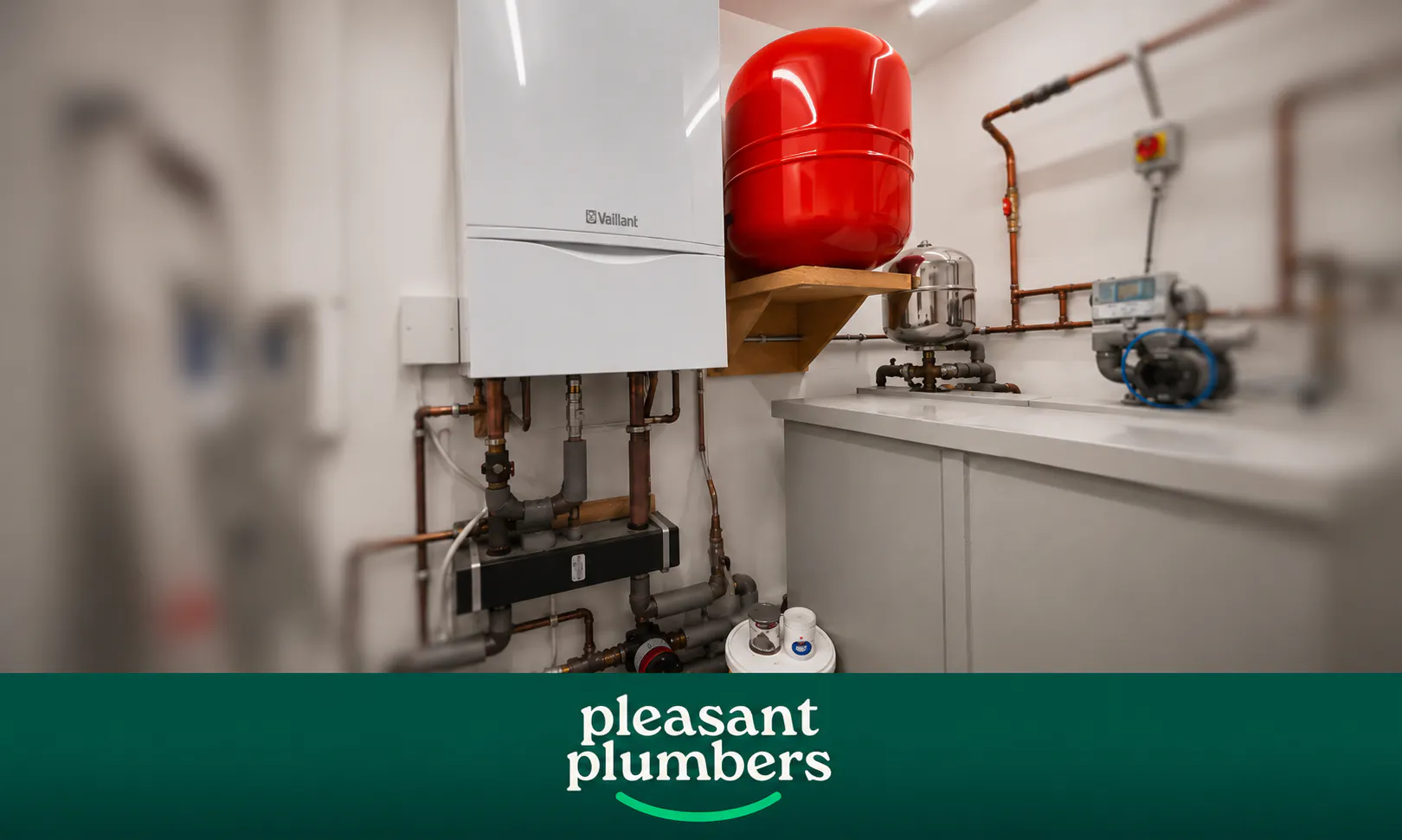
Walk the older end of almost any property estate — pre-2000 plant rooms replaced like-for-like ever since, church and historic buildings, smaller schools, care homes, smaller hotels — and you will find buildings heated by a single boiler with no redundancy. In resilience terms this is an N+0 configuration: the plant exactly meets the load, with no margin for any unit to fail. It is almost always the cheapest plant room to build, and the case for it gets made on capex day, by whoever is paying for the installation rather than whoever will be running the building in year four.
The five-year arithmetic looks different, and it is worth setting out plainly. The figures below use published UK hire-market rates where they exist; everything else is an illustrative assumption, flagged as such.
Take a building with a single 300kW boiler that fails in January — and January is when boilers fail, because that is when they work hardest. An emergency callout and diagnosis comes first; assume £500 to £1,500 depending on what the diagnosis takes. If the failure is terminal or the parts lead time runs to weeks, the building needs temporary heat. UK temporary commercial boiler hire is published at roughly £400 to £2,600 per boiler per week depending on capacity, with larger units commanding the higher rates; assume £1,200 a week for a unit of this size. Connection is additional and site-dependent — transport, craneage or HIAB, flue arrangements, tie-in pipework — and the hire specialists are explicit that access and pipework distance move this materially; assume £3,000 to £5,000 as a working allowance. Six weeks on temporary plant while a replacement is procured, delivered and commissioned is not pessimistic in mid-winter, when every supplier and contractor is at peak demand.
On those assumptions, the attendance, hire and connection come to around £11,000 to £14,000 — money that buys nothing permanent. The replacement boiler is then bought on top of that, in distress: no tender competition, a compressed programme, often weekend working. An uplift of 10 to 20% on the like-for-like installed price is an illustrative but realistic allowance for distressed procurement, and on commercial plant that uplift alone can run to several thousand pounds.
None of that counts what the outage did to the building itself. For a school it is closure risk; a care setting has a safeguarding question and an HSG274 hot water continuity problem on top; a hotel is into refunds and reviews territory by the second cold morning.
Now price the alternative at the point of installation. Two boilers in cascade, each sized to carry roughly two-thirds of the design load, instead of one unit sized to carry all of it. The cascade typically carries a capex premium — more flue, more controls, more labour — but it buys a fundamentally different failure mode. When one module fails, the building runs at reduced capacity rather than no capacity. The replacement happens on a planned programme, tendered properly, in spring, and the hire market is never called. Cascade plant also tends to run with better turndown across the year, because one module can carry the shoulder-season load alone instead of a single oversized boiler cycling against a small demand.
The honest version of the comparison is that N+0 wins if the boiler never fails inside the plant's life, and loses badly the first time it does — a single failure event consumes most or all of the capex that was saved, with the disruption sitting on top. Redundancy is an insurance premium with a quotable price, paid once, against an event with a quotable cost.
For FM directors, bursars and estate managers, the practical question is which buildings in the portfolio are still N+0 — most estates have a tail of them, usually the older and smaller stock — and whether anyone has priced what a January failure in each would actually cost. The plant room that was cheapest to build is rarely the cheapest to own.
Pleasant Plumbers' commercial team carries out plant resilience assessments across London portfolios. To discuss the N+0 buildings in your estate, call or WhatsApp 0800 046 1000, or email [email protected].