Escape of Water: How Insurers Now Price Commercial Leak Risk
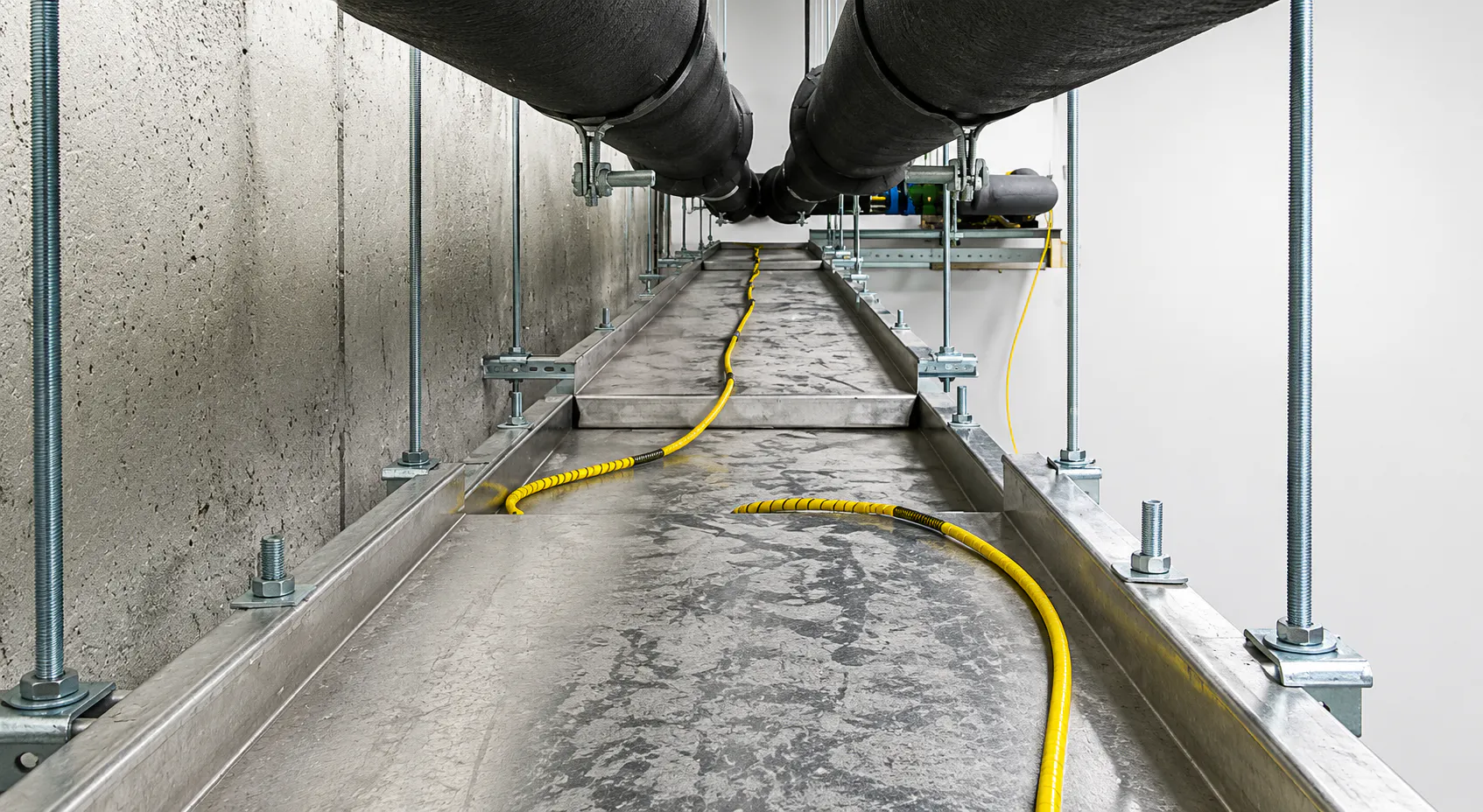
Escape of water has become a strategic priority for UK property insurers, and the way they underwrite it is changing in a way commercial operators will feel at renewal. Aviva describes tackling water leaks as a key priority for the industry and runs a "Prevention First" approach built around risk consultants and leak detection. Zurich notes that in commercial property the volume of escape-of-water claims may be lower than in homes, but the value of each one can be much higher. When insurers move a peril from "pay the claim" to "manage the risk," the buildings that cannot detect or isolate a leak quickly are the ones that get priced for it.
The macro backdrop is a property insurance market under sustained strain. The ABI reported total UK property payouts of £6.1 billion in 2025, the highest annual total on record, of which £1.2 billion was weather-related and up 14% year on year — a figure the ABI is explicit spans domestic, commercial and business interruption lines, and covers burst pipes and escape of water alongside storm and flood. Against that backdrop, escape of water gets specific underwriting attention because, unlike a storm, it is substantially preventable.
Three things follow for commercial operators.
Detection and isolation are becoming the things insurers actively look for.
Insurer risk guidance now centres on the same short list: good accessibility to plumbing, isolation valves that are functional, accessible, regularly exercised and formally identified, wet pressure testing of pipework where possible, checks on seals and joints for wear, and replacement of ageing components by a competent person. Continuous leak detection — flow monitoring and fluid-contact sensing that can alert and, in some systems, shut off automatically — sits on top of that list, increasingly offered through insurers' own partner schemes at preferential terms. A building that demonstrably manages the risk this way is in a different underwriting position to one that does not.
Some building types are flagged as higher risk by default.
Insurer loss-prevention guidance singles out hotels and properties with spa, pool or steam facilities, buildings left unoccupied, and installations more than twenty years old. One mid and high-net-worth insurer reported escape-of-water claim costs running over forty per cent higher when the property was unoccupied at the time of loss — the leak that starts on a Friday night and is found on Monday. Commercial buildings carry exactly that exposure across every weekend and every holiday closure.
Trace and Access is the clause that catches people out.
When a concealed leak occurs, locating it — lifting floors, opening risers, exposing pipework — is covered under a Trace and Access provision, and that cover is an add-on that does not come as standard on every policy. An operator who assumes the cost of finding a hidden leak is automatically covered can discover at claim time that the investigation, and the making-good afterwards, sits outside the policy. This is worth checking before a leak, not during one.
The causes are mostly mundane, which is the point. Insurers list burst pipes, failed seals, leaking appliance hoses and ageing joints among the common culprits, and note that modern construction — more built-in appliances, flexible hoses, plastic push-fit joints, more water moving around increasingly complex systems — has raised the baseline. Zurich makes the specifically commercial observation that hidden plant such as boilers and heaters is a significant source, and that complex commercial architecture can turn a small leak into an expensive loss when it runs undetected after hours. None of this is dramatic. It is fittings and components quietly failing in voids and plant rooms, where the damage is done by the time the water runs unnoticed rather than by the size of the leak.
The practical shift for FM directors, asset managers and estate teams is that escape of water has moved into the same bracket as fire and security: a risk the insurer expects to see actively managed, with detection and isolation designed in rather than cleaned up reactively. The questions worth asking now are which buildings in the portfolio have automatic leak detection and isolation, whether the policy actually carries Trace and Access cover, and whether the isolation valves are identified, accessible and exercised — because the difference between a contained leak and a six-figure claim is usually measured in how fast the water stops, not how fast someone arrives.
Pleasant Plumbers' commercial team carries out leak detection, isolation, and water system risk assessments across London portfolios. To review escape-of-water risk across your estate, call or WhatsApp 0800 046 1000, or email [email protected].
#FacilitiesManagement #RiskManagement
https://www.pleasantplumbers.com/commercial/insights/escape-of-water-commercial-leak-detection-insurance