The Drain Under the Commercial Kitchen Is a Compliance Liability, Not Just a Maintenance One
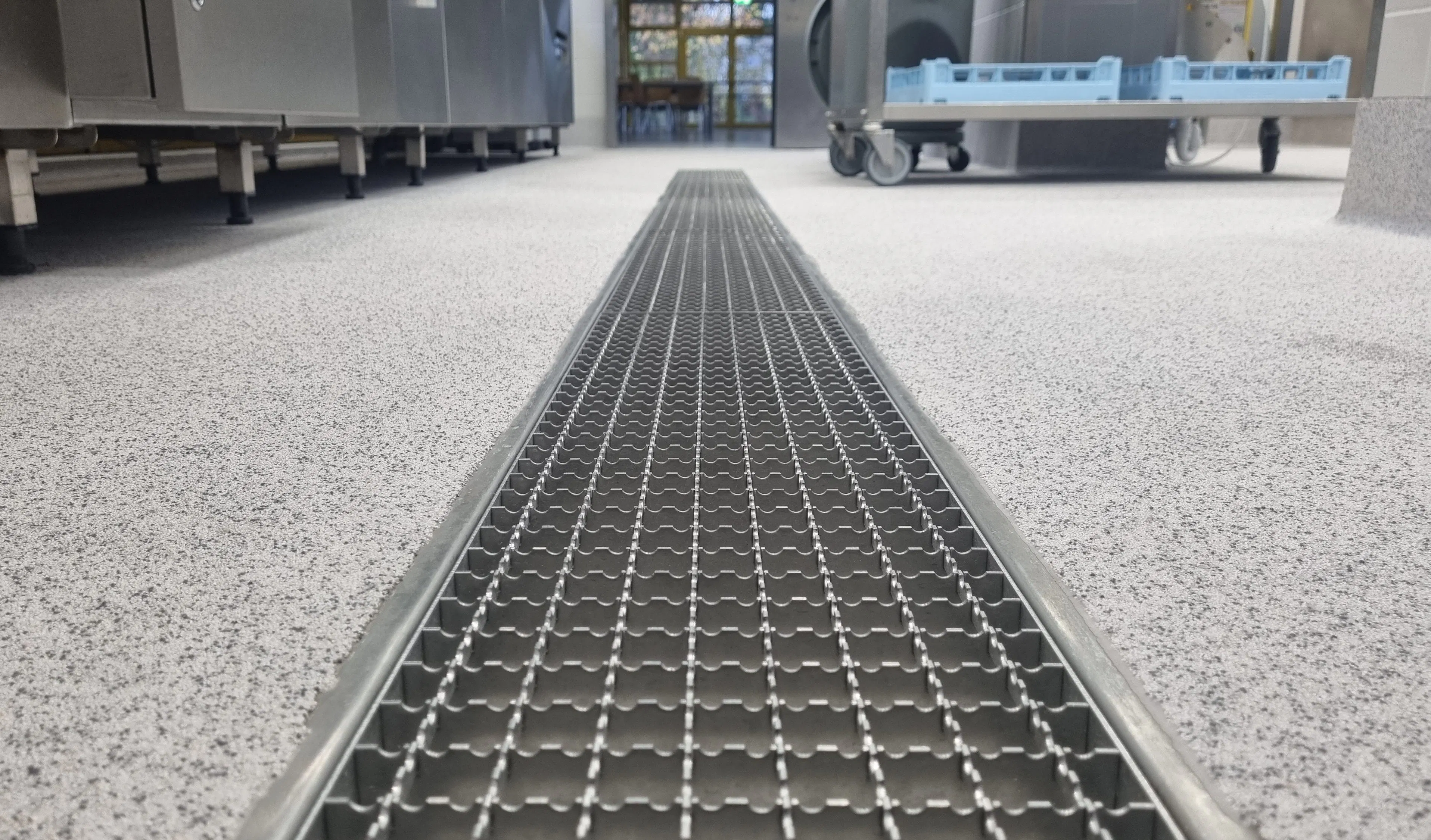
Fats, oils and grease are the one waste stream a commercial kitchen produces continuously and disposes of almost invisibly. They leave as warm liquid down the sink and the wash-up, and they arrive in the drain run as a cooling, hardening deposit that narrows the pipe a little more with every service. The point at which this becomes a problem is rarely a gradual one. It is a backed-up gully during a Saturday dinner service, or a letter from the water company, and by then the question has stopped being about maintenance and become one about compliance.
The legal position is firmer than many operators assume, and it does not rest on a single regulation. Under section 111 of the Water Industry Act 1991, it is a criminal offence to discharge into a public sewer any matter likely to injure the sewer, interfere with the free flow of its contents, or prejudice the treatment of what it carries. FOG is squarely within that prohibition. The penalties are not nominal. The offence is triable either way, and since the statutory-maximum cap on summary fines was removed in 2015 a conviction can carry an unlimited fine, with up to two years' imprisonment available on indictment. Separately, and more commonly encountered first, the water company can recover the cost of clearing a blockage directly from the business that caused it — an invoice rather than a summons.
Three things recur across commercial kitchen operators and the FM teams responsible for them.
The grease separator obligation and the discharge offence are two different things, and being clear on one does not cover the other.
Building Regulations Part H, paragraph 2.21, requires drainage serving a commercial hot-food kitchen to be fitted with a grease separator to BS EN 1825, or other effective means of grease removal. That obligation bites at design and construction, on new build or material change. It is not, on its own, a power that forces every existing kitchen to retrofit a separator. What governs an existing kitchen is section 111: regardless of when the kitchen was built or what it was fitted with, the operator must not discharge FOG that harms the sewer, unless that discharge is specifically authorised under a trade effluent consent. In most commercial kitchens it is not, which leaves section 111 as the operative line. A kitchen can be fully compliant with the Part H requirement that applied when it was built and still be committing the discharge offence today if its grease management has lapsed. The two obligations need to be understood separately, because satisfying one is routinely mistaken for satisfying the other.
Installing the device is treated as the compliance act, when the maintenance is the compliance act.
A grease separator or grease recovery unit is only ever as effective as its last service. Once the retained grease reaches capacity, the unit stops separating and FOG passes straight through to the sewer, and the premises is back in breach without anything visibly having changed. This is why water companies and local authorities increasingly ask not whether a device is fitted but for the maintenance log — the dated record of emptying, cleaning and waste transfer. An operator who can produce the unit but not the log is in a weak position in front of an enforcement officer, because the log is the evidence that the discharge offence is being actively prevented rather than assumed away.
The waste that leaves the kitchen carries its own duty of care, separate from the drain.
Environmental Protection Act 1990, the business has a duty of care to ensure that waste is transferred only to an authorised carrier and properly documented. That documentation regime is changing: the Digital Waste Tracking Service went live for voluntary use in April 2026 and becomes mandatory for waste sites from October 2026, replacing paper waste transfer notes with a central electronic record, and the duty of care will increasingly mean using a tracking-registered carrier rather than holding a paper note. The kitchen that diligently maintains its separator and then hands the recovered grease to an unlicensed operator for cash has closed one compliance gap and opened another. Enforcement on illegal waste-oil collection has tightened, and a documented, authorised disposal route is the operator's only protection if the waste is later fly-tipped in their name.
For hotel operations directors, contract caterers, and the FM teams running buildings with commercial kitchens, the practical position is that FOG sits across three separate legal duties — the discharge prohibition, the drainage design standard, and the waste duty of care — and an operator can be diligent on one while exposed on another.
The questions worth asking are whether the kitchen's grease management is evidenced by a current maintenance log rather than just a fitted device, whether the discharge risk has been assessed for the kitchen as it operates today rather than as it was built, and whether the recovered waste leaves the site on a documented, authorised route. The drain that nobody looks at is the one that produces the Saturday-night failure and the letter that follows it.
Pleasant Plumbers' commercial team carries out grease management, drainage surveys, and FOG compliance assessments for commercial kitchens across London. To review the drainage risk in your kitchens, call or WhatsApp 0800 046 1000, or email [email protected].
#FacilitiesManagement #Hospitality